80% of data breaches involve compromised credentials. What if database access had been properly governed?
What is Database Access Governance
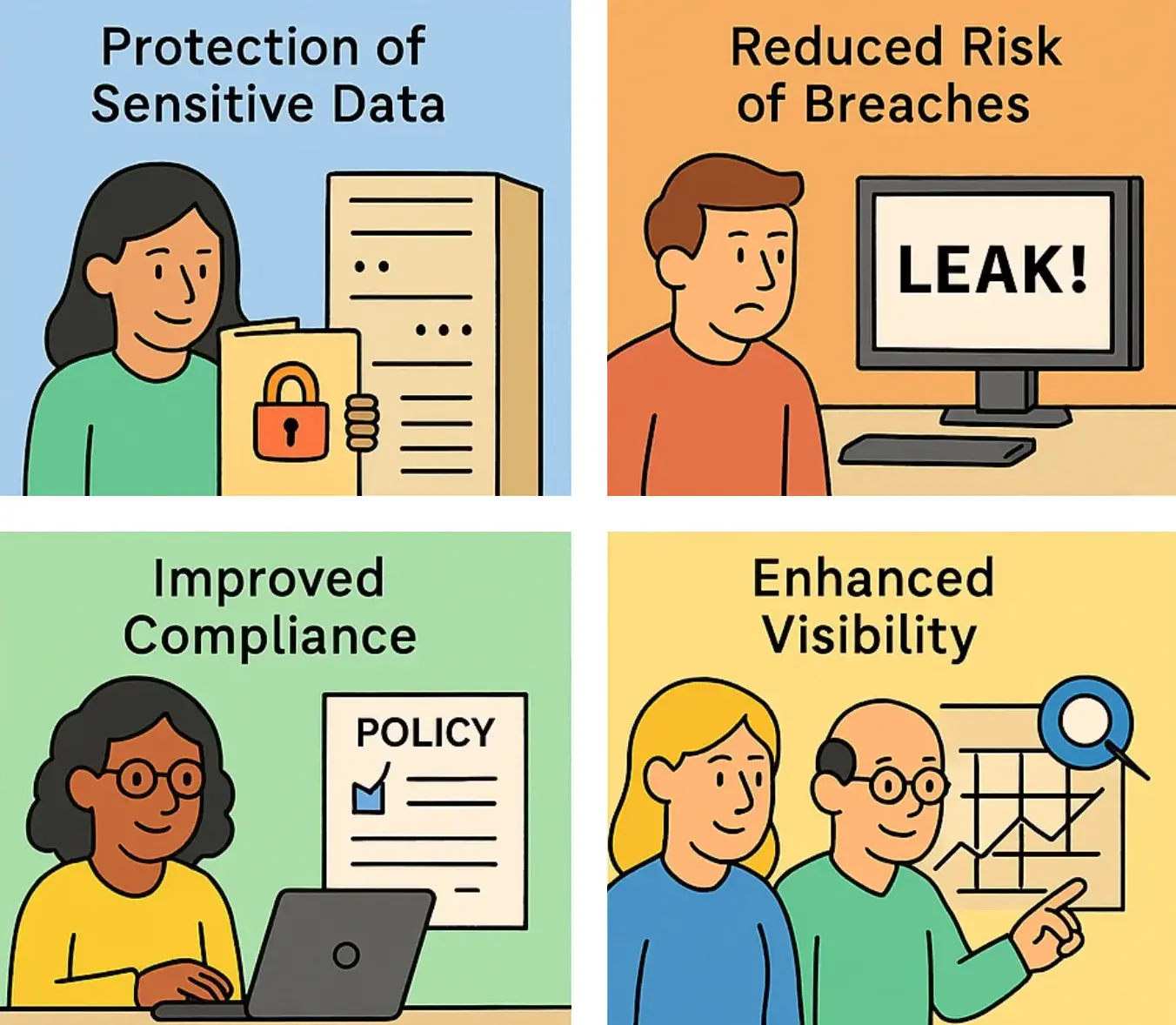
Database access governance is the framework of policies, tools, and processes that ensure the right people — and the right machine workloads — have the right access to the right database objects at the right time, and nothing more. It covers production reads, schema changes, ad-hoc queries, and the audit trail that proves who did what.
Why Database Access Governance Matters
Databases hold the records that regulators, customers, and auditors care about: PII, financial transactions, health data, intellectual property. Controlling who can query and modify those rows — and when — is no longer optional.
-
Mitigates security risks and prevents breaches
Most database incidents don't start with a zero-day. They start with over-permissioned engineers, stale credentials from former employees, or service accounts with
SELECT *on tables they don't need. Database access governance enforces least privilege at the schema, table, and column level. -
Ensures regulatory compliance
Frameworks like GDPR, HIPAA, SOX, and PCI-DSS mandate strict controls over who can access regulated data. You must restrict access and prove who queried what, when, and why — usually at statement-level granularity.
-
Protects reputation and customer trust
A leak of one production table can undo years of trust. Demonstrating disciplined database access governance — documented policies, periodic reviews, immutable audit logs — is what gets you through customer security questionnaires and SOC 2 reports.
-
Enables operational efficiency
With clear approval workflows, engineers get the access they need in minutes instead of waiting on a ticket. The governance system becomes a productivity tool rather than a gate.
-
Reduces financial and legal risks
Proactive governance is cheaper than breach remediation. It also helps you avoid the fines, lawsuits, and forced disclosures that follow a regulated-data leak.
Common Challenges
-
Lack of visibility into database access: Without statement-level logging, you can't tell whether someone ran
SELECT email FROM usersorSELECT * FROM users. Native database logs vary wildly across engines. -
Over-privileged users and service accounts: Engineers accumulate permissions through role changes and project handoffs. Service accounts often start with broad grants "just to get it working" and never get tightened.
-
Manual access reviews: Many teams still review access through spreadsheets exported from each database. It's tedious, error-prone, and doesn't scale across dozens of instances and engines.
-
Hybrid and multi-engine environments: A modern stack typically spans Postgres, MySQL, MongoDB, Snowflake, Redshift, and a few managed services. Each has its own GRANT syntax, role model, and audit format — centralized governance is hard.
-
Balancing security with developer velocity: Strict controls frustrate engineers, who then route around them — shared
psqlsessions, copied credentials in.envfiles, or queries run from a bastion host that nobody audits. -
Regulatory overlap: GDPR, HIPAA, CCPA, and PCI-DSS impose overlapping but non-identical requirements on database access logging and retention.
-
AI and machine workloads: Agents, ETL jobs, and analytics pipelines now read from production databases. They need access governance too, with the same audit trail as humans.
How to Achieve Database Access Governance
- Inventory every database instance and identify which ones hold regulated or sensitive data (PII, financial records, health data).
- Classify schemas, tables, and columns by sensitivity (public, internal, confidential, regulated) and assign masking and access policies accordingly.
- Define role-based access control (RBAC) at the project and database level, tied to SSO identities — no shared
adminorrootaccounts. - Enforce least privilege and apply just-in-time (JIT), time-limited grants for production access.
- Route every change through a review and approval workflow that enforces separation of duties.
- Capture statement-level audit logs and run access reviews every 3–6 months.
Tools for Database Access Governance
-
Monitoring and auditing
Datadog Database Monitoring, IBM Guardium, pgAudit (PostgreSQL), and the MySQL Audit Plugin provide visibility into database activity, track query patterns, and log statements for compliance and forensics.
-
Identity and access management (IAM)
Okta, Azure AD, and Google Workspace federate database access to corporate identities, eliminating local database accounts.
-
Secrets management
AWS KMS, HashiCorp Vault, and Azure Key Vault store database credentials and rotate them on a schedule, so static passwords don't live in config files.
-
Data classification and discovery
Varonis, AWS Macie, and Microsoft Purview scan databases to find regulated columns (emails, SSNs, card numbers) so you can apply masking and access policies where they matter.
How Bytebase Handles Database Access Governance
Bytebase is a database governance platform that implements database access governance across 25+ database engines from a single control plane. Instead of stitching together separate tools for IAM, auditing, masking, and access requests, Bytebase handles them in one place.
Role-based access control
Bytebase enforces access at two levels:
- Workspace roles — control who can manage database instances, configure policies, and administer the platform
- Project roles — control who can view, query, or modify specific databases within a project
Roles are tied to individual identities via SSO (Okta, Azure AD, Google Workspace) on Pro and Enterprise plans. No shared admin accounts.
Just-in-time database access
Instead of granting standing access to sensitive databases, Bytebase supports just-in-time (JIT) access. A developer requests temporary access, it goes through approval, and the access expires automatically after a set duration. This eliminates the problem of over-privileged users accumulating permissions over time.
Dynamic Data Masking
Bytebase applies Dynamic Data Masking at the query layer — sensitive columns are masked in real time based on the user's role and semantic type classifications. A DBA sees full data; an analyst sees partial masks; a contractor sees full masks. No data is changed at rest. Available on Enterprise plan.
Query access control via SQL Editor
All queries run through Bytebase's SQL Editor, which enforces access policies before execution. Users can only query databases and tables they have permission to access. Every query is logged with the user's identity.
Audit trail
Every action in Bytebase — queries, schema changes, logins, permission changes, approval decisions — is recorded in the audit log with the real user's identity, timestamp, and full SQL text. Logs can be exported via API or streamed as JSON to any SIEM (Datadog, Splunk, Grafana). Available on Pro and Enterprise plans.
Change review and approval
Database changes go through a structured workflow: submit SQL → automated SQL review (200+ rules) → approval → deployment. This enforces separation of duties — the person who writes the SQL cannot be the same person who approves it. Enterprise tier adds custom multi-tier approval workflows.
Summary
Database access governance is a critical component of any organization's security strategy. By implementing the right tools and policies, you can protect sensitive data in your databases, ensure regulatory compliance, and keep engineers productive without handing out standing production access.
FAQ
What is database access governance?
Database access governance is the framework of policies, tools, and processes that ensures the right people and machine workloads have the right access to the right database objects at the right time. It covers access control, auditing, compliance, and data protection across an organization's databases.
How does database access governance differ from database security?
Database security focuses on protecting databases from external threats (encryption at rest and in transit, network isolation, intrusion detection). Database access governance focuses on controlling internal access — who can query, modify, or export which tables, through what approval process, and with what audit trail. Both are necessary; governance addresses the insider and over-privilege risks that security tooling alone doesn't cover.
How does Bytebase help with database access governance?
Bytebase provides role-based access control, just-in-time temporary access, Dynamic Data Masking, query-level access control via its SQL Editor, statement-level audit logging, and change approval workflows — all from a single platform supporting 23+ database engines. It eliminates the need to configure access controls separately in each database.